Shared AC Room
Private AC Room
Quick Answer: The 100 Hour Yoga Teacher Training at Yash Yoga School in Goa is an 11-day residential course running 5th–15th every month. It covers Hatha Yoga, Ashtanga Vinyasa, Pranayama, Meditation, and Yoga Philosophy. Course fees are USD 599 (shared AC room) and USD 699 (private AC room), both inclusive of accommodation and Satvik meals. This is a school-level certification — not Yoga Alliance registered. The RYT-200 requires completion of the full 200-hour programme.
If you are drawn to yoga but not yet ready to commit to a full month-long training, the 100 Hour Yoga Teacher Training at Yash Yoga School in Goa is a serious and well-structured starting point. This is not a casual retreat or a wellness holiday — it is an 11-day immersive course with a disciplined daily schedule, qualified teachers, and a curriculum that covers asana, breathwork, philosophy, and meditation in real depth.
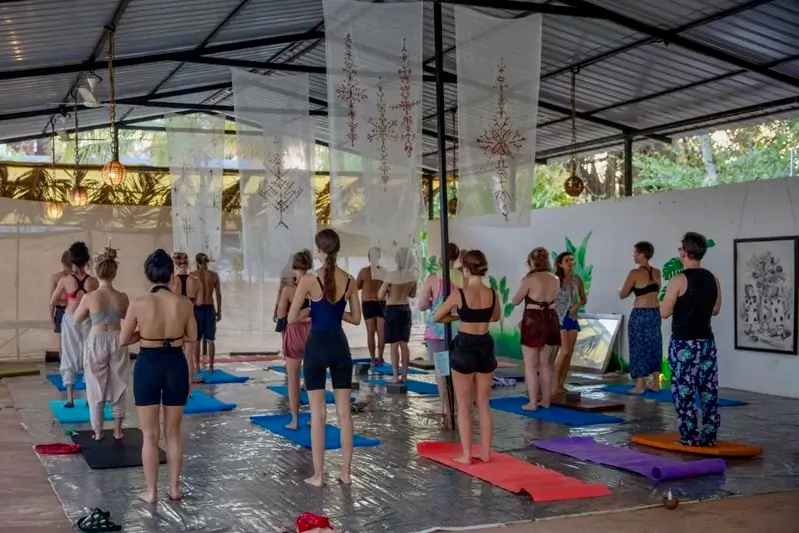
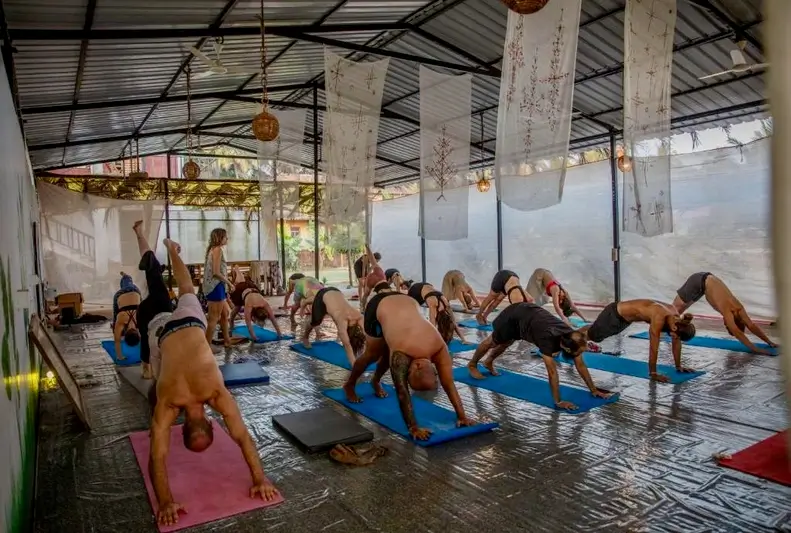
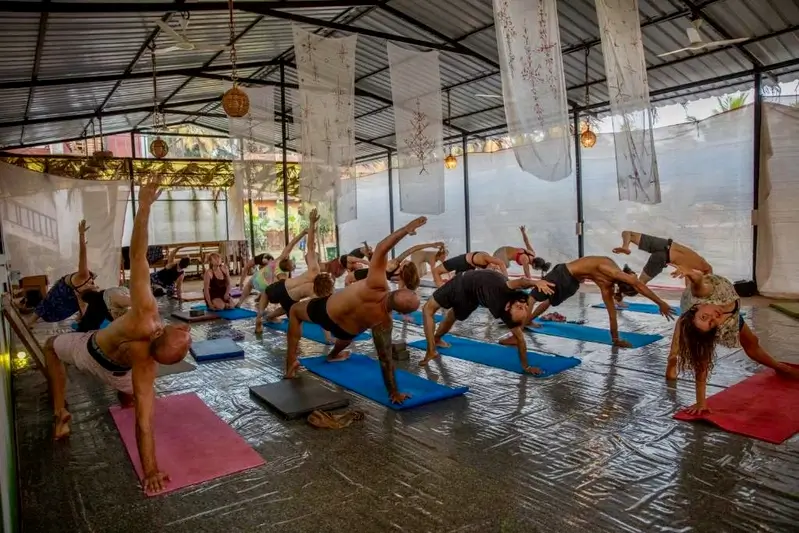
Across 11 days you move through two asana practices daily — Hatha or Vinyasa in the morning, Ashtanga in the afternoon — sit in guided meditation every evening, and study Yoga Philosophy, Anatomy, and Pranayama theory in structured classroom sessions. Most students notice a real shift by day four or five: the body becomes more responsive, the evening meditation that felt foreign on day one becomes something genuinely looked forward to, and the philosophical ideas discussed in class begin connecting to what happens on the mat.
You stay on campus at our Goa school for all 11 days, with three Satvik meals prepared daily by our kitchen team. Students are asked to follow the school's lifestyle guidelines during the course — no alcohol, no smoking, phones away during sessions. This is not an arbitrary restriction. It is the environment that makes a real immersion possible.
Many students who complete this 100-hour course go on to enrol directly into the 200 Hour Yoga Teacher Training in Goa. The foundations built here — in asana precision, breath control, and philosophical understanding — make the transition to the full certification programme significantly smoother.
Goa is one of the most practical choices in India for a first yoga training. It has the environment, the wellness infrastructure, and the relaxed international atmosphere that make an intensive 11-day course feel supported rather than difficult.
No prior yoga experience is required. The pace, syllabus, and group size (maximum 15 students) are designed specifically for first-time practitioners. You will not be overwhelmed — you will be guided.
Can't commit to 26 days right now? This 11-day format is built for people who want a genuine immersive experience within a tighter schedule — and still come away with a real foundation, not just an introduction.
Many students use the 100-hour course as a test run before committing to the full certification. It is designed as Part 1 of the 200-hour curriculum — if you continue, you do not repeat what was already covered here.
You practise yoga regularly but want to understand it more deeply — the anatomy behind the postures, the philosophy that shapes the practice, the breathing techniques that change how you move. This course provides that theoretical and practical foundation.
AC Accommodation
11 nights on campus
3 Satvik Meals Daily
Breakfast, lunch & dinner
Course Materials
Manuals & handouts
School Certificate
On completion
Small Group
Max 15 students
Campus WiFi
Available on campus
Not included: flights, travel insurance, airport transfer (USD 40 available), personal expenses.
11 Days (6 days/week)
Shared AC Room
Private AC Room
Morning Bell
Morning Tea
Shatkarma & Pranayama
Hatha / Vinyasa Flow
Breakfast
Yoga Philosophy
Alignment, Adjustment & Methodology
Lunch
Anatomy & Physiology
Ashtanga Yoga
Meditation & Mantra Chanting
Dinner
Lights Off
Following K. Pattabhi Jois' Ashtanga Primary Series, students progress methodically through the full sequence:
Surya Namaskar (Hatha), Virbhadrasana A & B, Utthita Trikonasana, Parvakonasana, Parivritta Parsvakonasana, Parsvaottanasana. Sitting postures: Bhardwaj Asana, Ardha Matsyendrasana, Bhujangasana, Paschimottanasana, Janusirsasana, Purvottanasana.
Surya Namaskar B, Trikonasana, Virbhadrasana A–C, Ardha Chandrasana, Natrajasana, Vriksasana, Garudasana, Marichyasana A/B/C, backbends (Ustrasana, Dhanurasana, Chakrasana), forward folds, inversions, core work.
Sun Salutations A/B/C (Hatha & Vinyasa), Moon Salutation, Teaching Sequencing, arm balances (Bakasana, Mayurasana, Vashisthasana, Astavakrasana), inversions (Sarvangasana, Sirsasana, Halasana), Savasana.
Basic Relaxation · Tension Relaxation · Full Body Relaxation
Digestive, Respiratory, Circulatory, Nervous & Endocrine Systems · Nadis · Chakras · Muscular & Skeletal Systems · Joint Movements · Breathing · Inversions · Savasana
Introduction to yoga & its philosophy · Yoga Sutras of Patanjali · 4 aspects of mind · Yama & Niyama · The 8 limbs · Pancha Vayus · Panchakoshas · Triguna · Chakras · Three Doshas · 4 Padas · Diet & Nutrition for a Yogi
Introduction & benefits · Clavicular, Thoracic & Diaphragmatic Breathing · Ujjayi · Bhastrika · Kapalbhati · Nadi Shodhana · Bhramari · Surya Bhedi & Chandra Bhedi · Sheetali & Sheetkari
Om Asato Maa Sadgamaya · Tvameva Mata ca Pita Tvameva · Om Tryambakam Yajamahe · Om Sahana Vavatu · Guru Stotram · Shloka on Sage Patanjali · Hare Rama Hare Krishna (Maha Mantra)
Positive & conscious communication · Time management · Qualities of a teacher · Demonstration, observation, assisting & correcting · Voice use in class · Mental preparation · Class structure planning · Assessment: written test, asana practical, attendance & behaviour
The day starts at 5:30 AM with the morning bell. Most students find the early rise becomes easier by day three — the body adjusts quickly when the sleep is genuinely restful and the food is clean. By 6:30 you have morning tea, and by 7:00 the first session begins: Shatkarma cleansing and Pranayama. This combination, before the body has eaten or been stimulated by a screen, is one of the most effective parts of the programme — students consistently report that this morning Pranayama practice changes how the rest of the day feels.
The 7:30 Hatha or Vinyasa session runs until 9:00. This is where physical foundations are built — alignment, correct breath engagement in postures, the relationship between stability and ease. Breakfast follows, then two back-to-back theory sessions: Yoga Philosophy from 10:00 to 11:00, and Alignment, Adjustment and Methodology from 11:00 to 12:30. These are taught in a classroom format — not lectures, but discussion-based sessions where questions are expected.
Lunch at 12:45 is followed by a rest period — genuinely important in a programme this intensive. The afternoon Anatomy & Physiology class (2:45) and the Ashtanga Yoga session (4:00–5:30) round out the academic and physical work. The evening ends with Meditation and Mantra Chanting from 6:00 to 7:00, followed by dinner and lights off at 10:00.
Sunday is a rest day. Most students use it to explore Goa — the beaches, local markets, fresh coconut water, the Konkani food scene. A small number choose to stay on campus and journal, practise independently, or simply rest. Both are fine. The rest day is a deliberate part of the design: integration happens when the system is given space to absorb what it has been receiving.
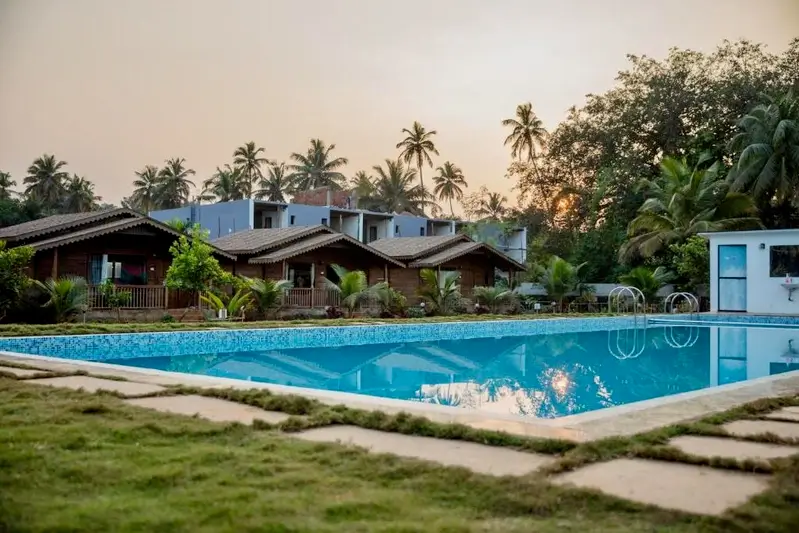
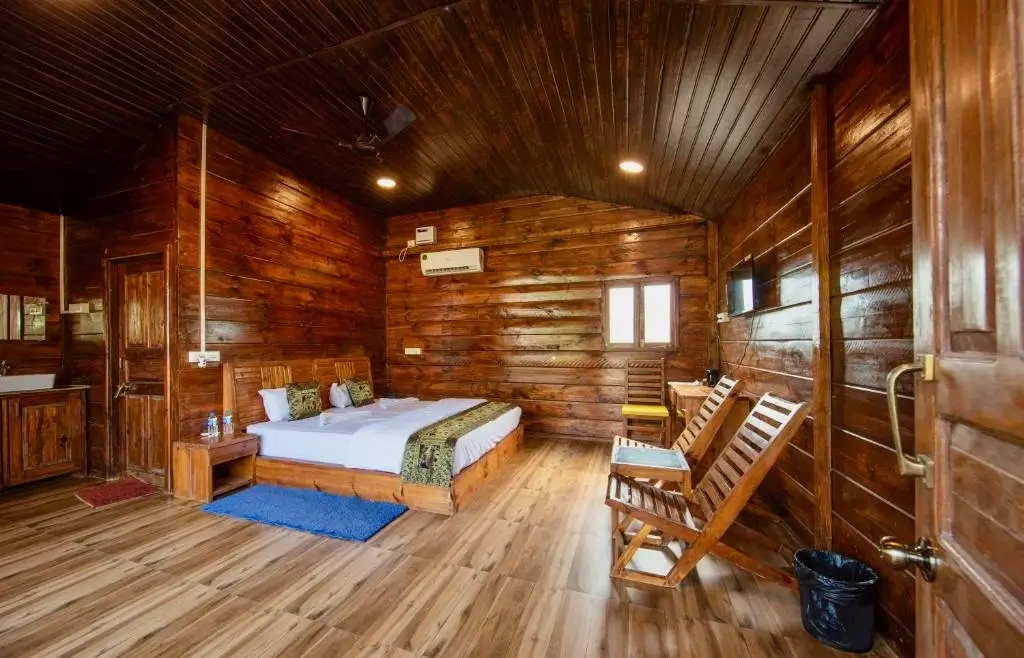
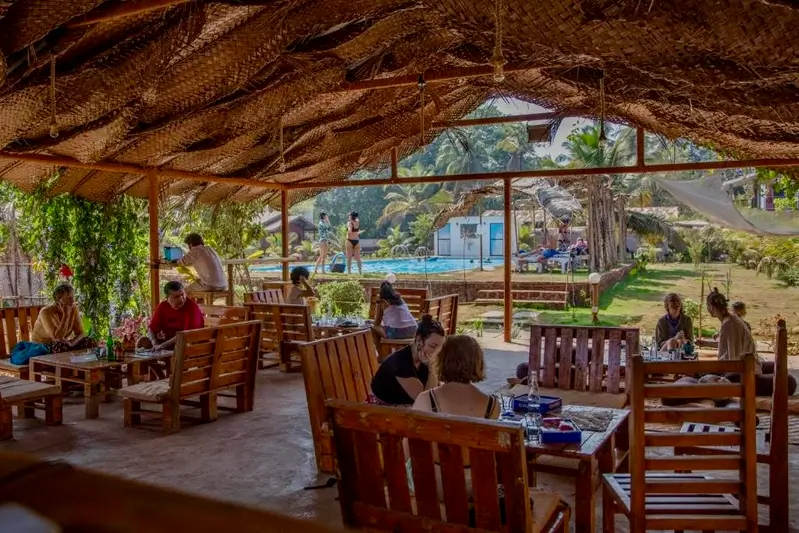
You stay on the Yash Yoga School Goa campus for all 11 nights. Rooms are clean, bright, and well-ventilated with attached bathrooms and 24-hour hot water. You choose between a shared AC room (two students, same gender) or a private AC room based on your preference and budget. The campus is set away from road traffic — quiet enough for meditation and early morning wake-ups, with easy access to Goa's beaches and markets on the rest day.
Students who stay on campus, rather than commuting from outside accommodation, consistently get more from the course. The 5:30 AM start is far more manageable when you are already in the right environment, and the integration between sessions — the conversations over meals, the quiet walks between the practice hall and your room — is part of what makes the 11 days feel like more than just a sequence of classes.
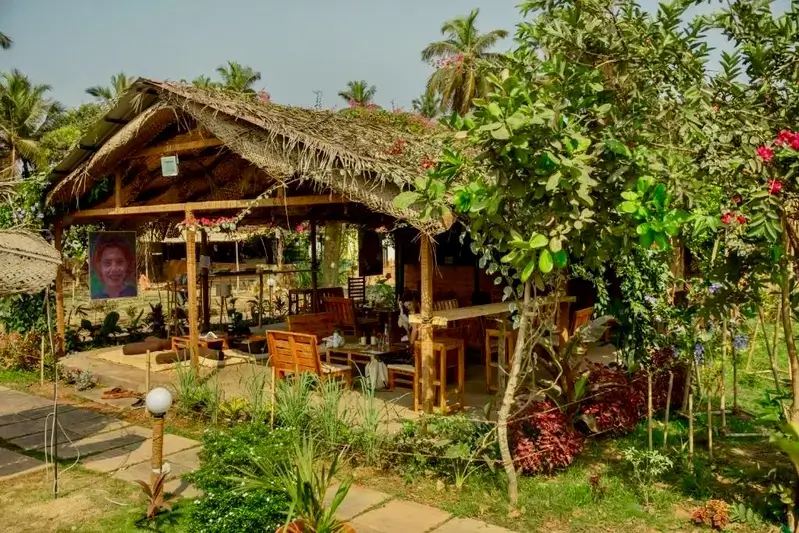
Three meals a day are prepared fresh by our kitchen team and served at the times built into the daily schedule. The food is Satvik — plant-based, lightly spiced, free of processed ingredients: rice, dal, sabzi, roti, fresh salads, seasonal fruit. Students with heavier diets typically notice by day three that they feel clearer in the morning sessions and less sluggish in the afternoon practice. This is not coincidental — the Satvik approach is specifically designed to support daily intensive yoga practice.
Meat, fish, eggs, and alcohol are not served or permitted on campus. If you have specific dietary requirements — allergies, intolerances, or medical needs — inform us before your arrival and the kitchen team will accommodate where possible.
The 100-hour programme is designed as Part 1 of the full 200 Hour Yoga Teacher Training. If you continue after completing this course, you do not repeat what has already been covered here — you begin from where the 100-hour left off. The second phase deepens the asana practice, expands the Yoga Philosophy curriculum, introduces advanced Pranayama and meditation techniques, and focuses heavily on Teaching Methodology — how to plan, deliver, and hold a class professionally.
Completing the full 200-hour programme makes you eligible to register as an RYT-200 with Yoga Alliance USA — the internationally recognised qualification required to teach yoga professionally in most countries. Yash Yoga School is a registered RYS 200 / RYS 300 / RYS 500 school with Yoga Alliance.
Many students arrive planning to do only the 100-hour course and leave having already registered for the 200-hour programme, because the experience of being on campus — the daily practice, the people, the environment — makes the continuation feel like the natural next step rather than a significant additional commitment.
A high degree of self-motivation is required throughout the programme. Students are expected to attend all sessions — asana classes, philosophy lectures, meditation, and spiritual activities. Absences without prior notice may affect your final assessment. Meat, fish, eggs, alcohol, tobacco, and recreational drugs are not permitted on campus during the course. Students who do not comply with school rules may be dismissed without a refund.
Punctuality is mandatory — students who arrive late will not be admitted to a session already in progress. If you are fasting on any day, notify the kitchen manager in advance to avoid food waste. Clear any outstanding dues and return all borrowed materials before departure. Campus accommodation is for enrolled students only; visiting friends or family must arrange a separate room.
The advance deposit (25% of course fee) is non-refundable. In a genuine emergency, the deposit may be transferred to a future batch at the school's discretion — this must be requested before the course start date. If a student leaves after the course has begun, fees already paid are not refunded. There is no separate cancellation charge.
The 100 Hour Yoga Teacher Training in Goa at Yash Yoga School costs USD 599 for a shared AC room and USD 699 for a private AC room. Both are fully inclusive — 11 nights accommodation, three daily Satvik meals, and all course materials. No hidden charges.
The 100 Hour YTT at Yash Yoga School Goa is 11 days. Each batch runs 5th–15th every month, six days per week with one rest day included.
The 100-hour programme is an entry-level foundation course and is not Yoga Alliance certified. To teach internationally with Yoga Alliance recognition (RYT-200), you need to complete the 200-hour Yoga Teacher Training. Many students begin here before progressing to the full certification.
Anyone with an interest in yoga and an open mindset is welcome. No prior experience required. No strict age limits. Both Indian and international students are eligible.
Daily asana sessions cover Hatha Yoga, Ashtanga Vinyasa, and Vinyasa Flow. The curriculum also includes Pranayama, Meditation, Yoga Nidra, Yoga Philosophy (Patanjali's Yoga Sutras), Anatomy & Physiology, Mantra Chanting, Shatkarmas, and Teaching Methodology.
Yes — a school completion certificate from Yash Yoga School. This is not Yoga Alliance certified. For the internationally recognised RYT-200, the full 200-hour YTT is required. The 100-hour course counts as Part 1 if you continue at Yash Yoga School.
Yes. The 100-hour programme is structured as Part 1 of the 200-hour curriculum. Students who complete it can enrol directly in the second half without repeating modules already covered. Many do exactly this.
The nearest airport is Manohar International Airport, Goa (GOX), approximately 40 minutes from the school. We offer airport pickup for USD 40 — a team member meets you at arrivals and brings you directly to campus.
Yes. We accept USD, EUR, and GBP via international bank transfer, credit card, and PayPal. All fees are inclusive of tuition, accommodation, and meals — no hidden charges.
Yes. After payment confirmation we provide an official invitation letter from the school. Most international students apply for an Indian e-Tourist Visa, processed online in 3–5 business days.
No — airport pickup is a separate service at USD 40 from Manohar International Airport (GOX). A team member meets you at arrivals with a name board and brings you directly to the school.
Batches start on the 5th of every month. Seats are limited to 15. Secure yours with a 25% deposit.